
Technical Specifications of the BIKAI HPLC System
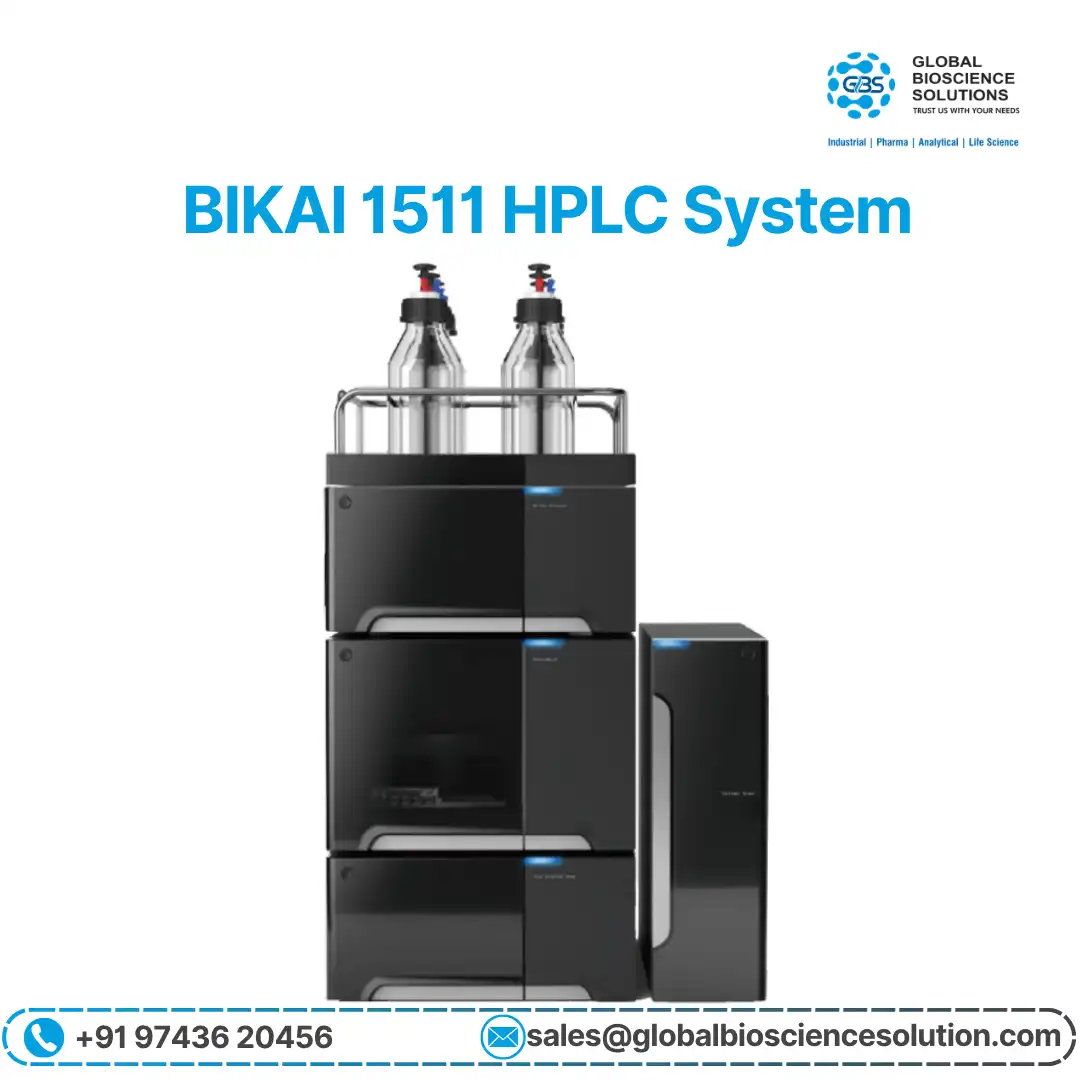
The BIKAI series is a customizable chromatography platform, from a basic isocratic system to an advanced gradient or UHPLC configuration.
| System Capabilities and Analytical Performance | |
|---|---|
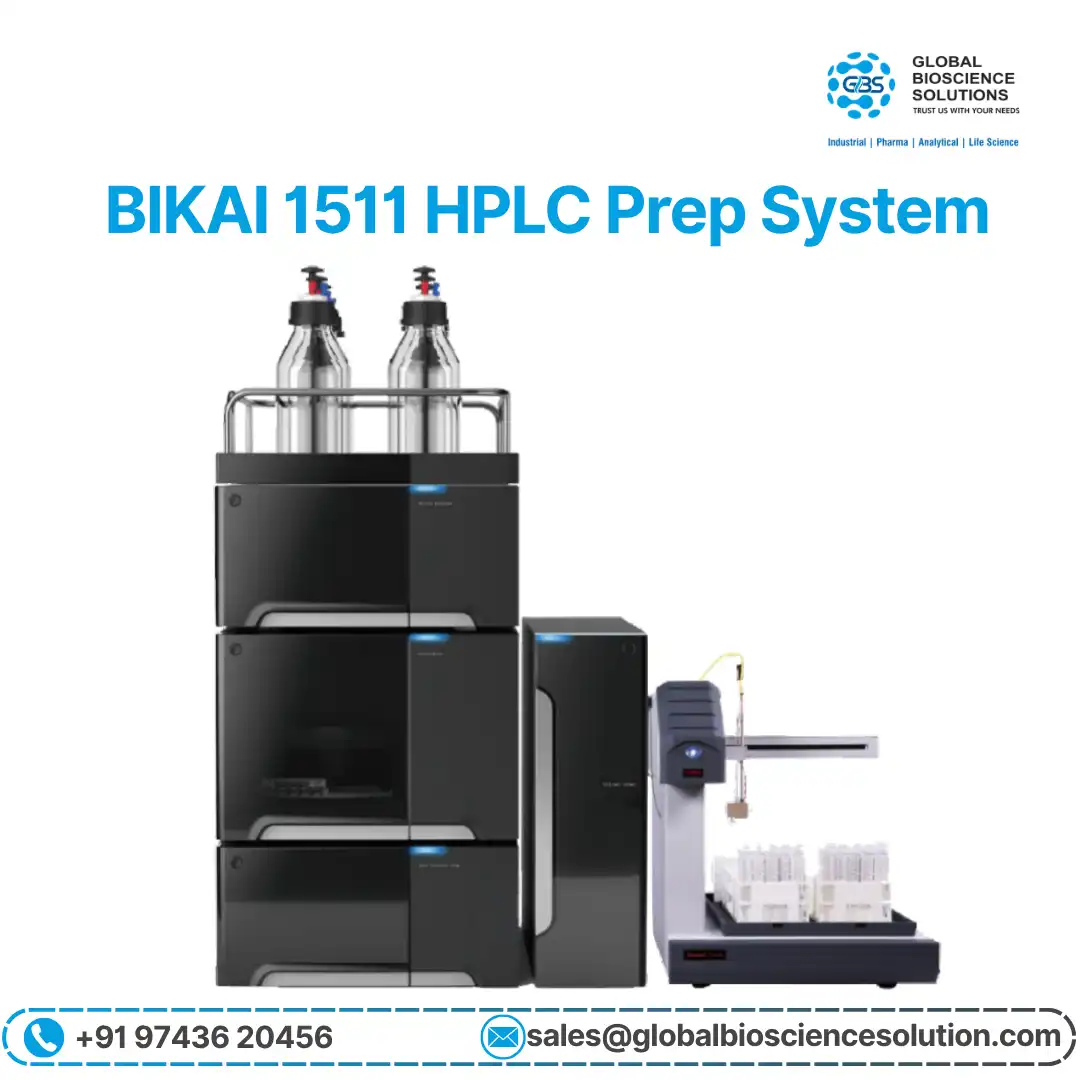
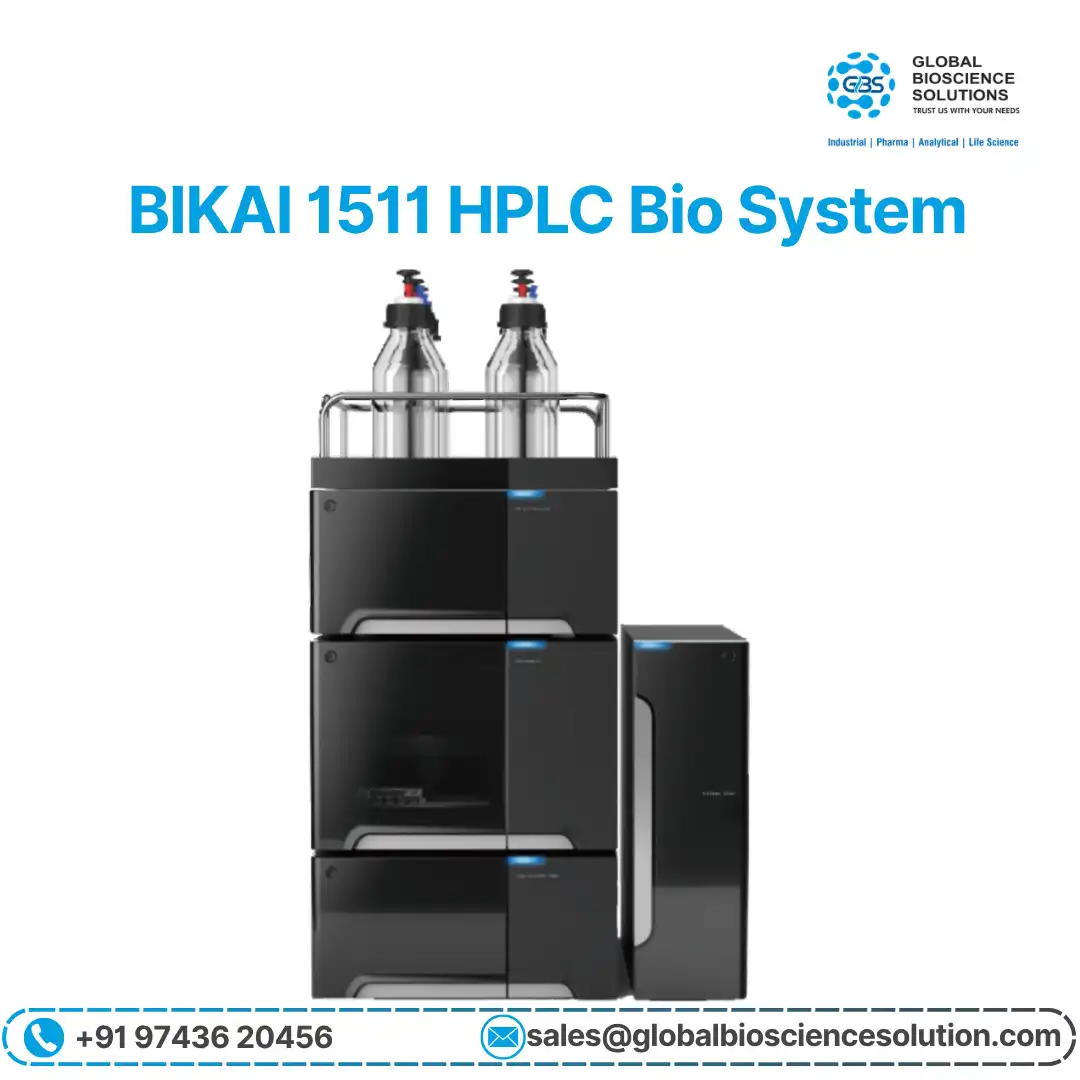
| Brand / Models | BIKAI 1511 HPLC, 1511 Prep, 1511 Bio, 1521 UHPLC |
| System Configurations | Isocratic, binary gradient, quaternary gradient, preparative, bio-inert, UHPLC |
| Max. Operating Pressure | 10,500 PSI (standard HPLC) | Up to 16,000 PSI (UHPLC 1521 series) |
| Flow Rate Range | 0.001 to 10.000 mL/min (preparative models up to 150 mL/min) |
| Flow Rate Precision | 0.1% RSD or better at 1 mL/min, water |
| Pump | Series double-plunger reciprocating pump, no damper needed, pressure pulsation below 1% |
| Detector Options | UV detector (190 nm to 900 nm) | PDA (diode array) detector, 1024-pixel resolution, standard online degassing |
| Autosampler | Full and partial loop, microlitre pick-up, cooling options, capacity up to 4 x 96-well plates |
| Column Oven | Air circulation heating and cooling, 4°C to 85°C |
| Bio-Inert Option | PEEK and titanium flow path, pH 1.0 to 12.5 |
| Software | Chromal EyouLab, networkable, GMP/GLP, FDA 21 CFR Part 11 compliant |
Key Features of the BIKAI Liquid Chromatography System
- Pulsation-Free Pump TechnologyA series double-plunger reciprocating pump removes the need for dampers and keeps pressure pulsation below 1% for stable baselines and reproducible retention times.
- Bio-Inert HPLC (1511 Bio)PEEK and titanium pathways prevent metal-induced sample adsorption, which suits biotechnology samples, proteins and extreme pH gradients (pH 1.0 to 12.5).
- UV and PDA DetectorsConfigure an HPLC with UV detector or a high-sensitivity HPLC with PDA detector with 1024-pixel resolution, online degassing and wide linear ranges for trace components.
- HPLC with Autosampler for High ThroughputThe HPLC system with autosampler and EyouLab data system run automated sequences, with peak width algorithms and user access management.
- 21 CFR Part 11 Compliant SoftwareAudit trails, electronic signatures and secure user management support GMP, GLP and FDA data integrity requirements.
HPLC Applications by Industry
- Pharma and Quality ControlAn HPLC system for pharma covering API assay, impurity profiling, dissolution sample analysis and routine QC in GMP labs.
- Food Testing and Chemical AnalysisDetect preservatives, mycotoxins and pesticide residues for food safety testing, and run general chemical analysis.
- Research and BiotechnologyPerform protein purification, compound isolation with preparative HPLC, and 2D-UHPLC for complex biological matrices.
HPLC vs UHPLC: Choosing the Right BIKAI System
| Factor | HPLC (1511) | UHPLC (1521) |
|---|---|---|
| Max. pressure | 10,500 PSI | Up to 16,000 PSI |
| Column particles | Conventional particle columns | Sub-2-micron particle columns |
| Speed and resolution | Excellent for conventional analysis | Faster runs and superior resolution |
| Best for | Routine QC, assay, general analysis | High-throughput and complex separations |
HPLC vs Gas Chromatography: Which Do You Need?
HPLC separates compounds dissolved in a liquid mobile phase, so it suits non-volatile, polar and thermally sensitive compounds such as APIs, proteins and mycotoxins. Gas chromatography suits volatile and semi-volatile compounds such as residual solvents. Many labs run both. See the BIKAI GC 2000 gas chromatography system for volatile analysis.
How HPLC Analysis Works
- Prepare the mobile phase and degas it with the online degasser.
- Inject the sample automatically with the autosampler.
- Pump it through the column at a controlled flow rate and pressure, with the column oven holding temperature.
- Detect each compound with the UV or PDA detector.
- Process the chromatogram in EyouLab to identify and quantify peaks with a full audit trail.
Explore Related Laboratory Instruments
HPLC System FAQs
What is the BIKAI HPLC system price?
The HPLC machine price depends on the configuration (isocratic, binary or quaternary gradient, preparative, bio-inert or UHPLC), the detector and the autosampler. Use the quote form or WhatsApp to get a customized GST quotation.
Do you supply the HPLC system in India?
Yes. Global Bioscience Solutions supplies the BIKAI HPLC system across India with installation and support for pharma, food testing, biotechnology and research laboratories.
Is the chromatography software FDA compliant?
Yes. The Chromal EyouLab data system is FDA 21 CFR Part 11, GMP and GLP compliant, with audit trails, electronic signatures and secure user management.
What is the difference between standard HPLC and the UHPLC system?
The standard 1511 HPLC operates up to 10,500 PSI for conventional analysis. The 1521 UHPLC withstands up to 16,000 PSI, which allows sub-2-micron particle columns for faster runs and higher resolution.
What detectors are available with the BIKAI HPLC?
You can configure a UV detector (190 nm to 900 nm) or a PDA (diode array) detector with 1024-pixel resolution and standard online degassing.
Is an HPLC system with autosampler available?
Yes. The autosampler supports full and partial loop injection, microlitre pick-up, cooling options and up to 4 x 96-well plates for high-throughput automated injection.