Written by GBS Technical Team — Cryo-EM Consumables Specialists · Last updated: 2026
What Is UltrAuFoil? — Gold From Film to Mesh
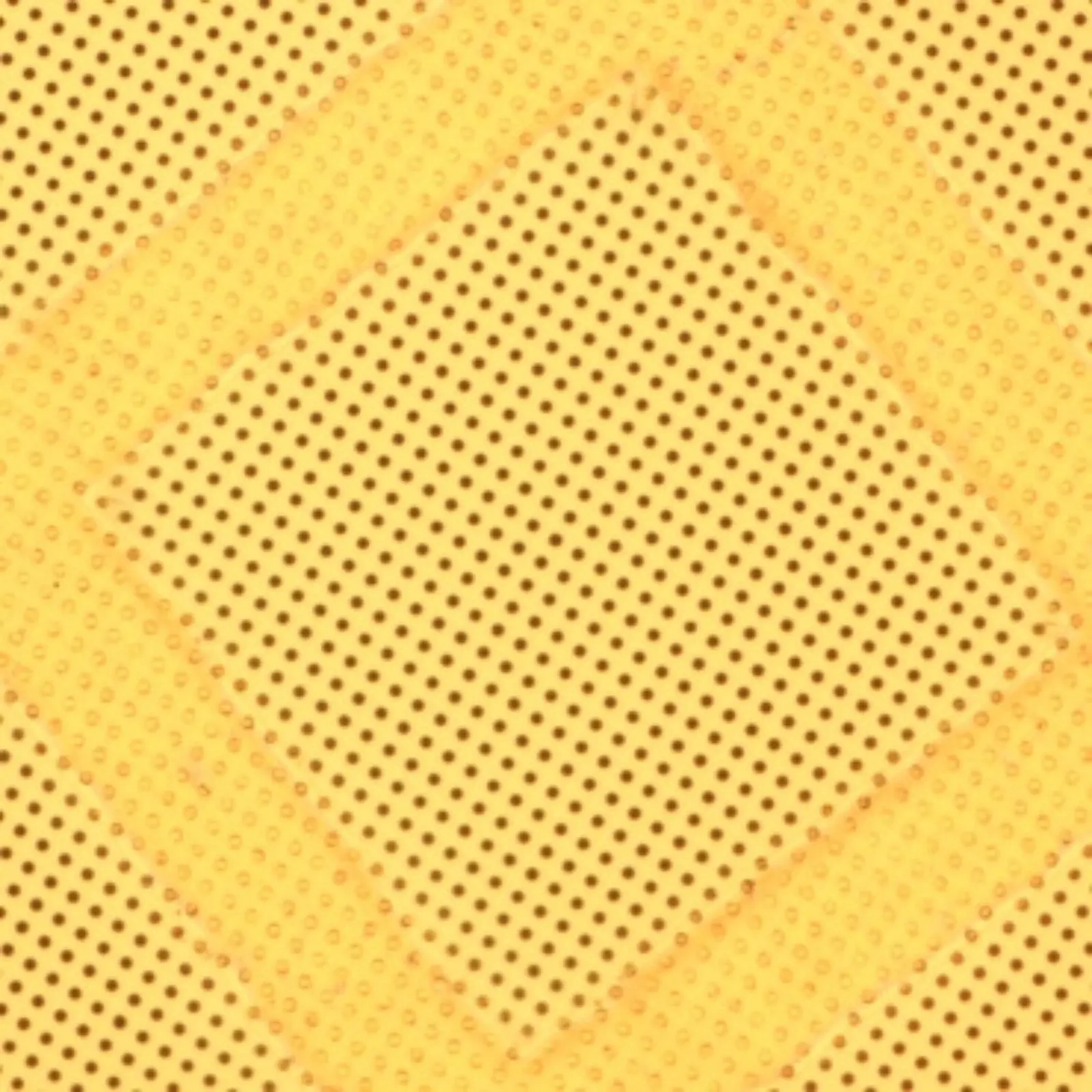
Every standard TEM grid consists of two parts: a perforated support film (traditionally carbon) that holds the sample, and a metal mesh (traditionally copper) that gives the grid mechanical rigidity. UltrAuFoil is different — it replaces both components with gold. The holey film itself is fabricated from gold, and it sits on a gold mesh. The entire structure, from edge to centre, is a single continuous material.
This might sound like a minor material substitution, but it solves one of the most persistent problems in high-resolution cryo-electron microscopy: beam-induced motion. When the electron beam strikes a standard carbon-on-copper grid, the two materials — with different thermal expansion coefficients, different electrical conductivities, and different mechanical properties — respond differently to the dose. The result is a tiny but resolution-limiting movement of the specimen support during each exposure, blurring the very details that high-resolution structural biology depends on.
UltrAuFoil was developed specifically to solve this problem — and it has become the substrate of choice for structural biology groups pushing toward atomic and near-atomic resolution.
Manufactured by Quantifoil Micro Tools GmbH — the same German company behind the original QUANTIFOIL carbon substrates. UltrAuFoil represents their premium, high-resolution product line, engineered for the most demanding cryo-EM applications.
How UltrAuFoil Reduces Beam-Induced Motion — The Mechanism
Beam-induced motion has been recognised as a major resolution-limiting factor since the introduction of direct electron detectors, which are fast enough to actually observe it happening frame-by-frame within a single exposure. Understanding why UltrAuFoil helps requires understanding what causes the motion in the first place.
🔴 QUANTIFOIL (Carbon on Copper)
- ✗ Carbon film and copper mesh have different thermal expansion coefficients
- ✗ Carbon is a poor electrical conductor compared to metal — charge builds unevenly across the film
- ✗ Under electron dose, the film and mesh expand/contract at different rates — creating mechanical stress
- ✗ This stress manifests as micro-scale movement of the ice layer during exposure — “doming” and drift
- ✗ Movement blurs high-resolution signal — particularly damaging above ~3 Å target resolution
🟡 UltrAuFoil (Gold on Gold)
- ✓ Film and mesh are the same material — matched thermal expansion, zero mismatch stress
- ✓ Gold is an excellent electrical conductor — charge dissipates uniformly and rapidly
- ✓ Under electron dose, the entire grid structure responds uniformly — no differential expansion
- ✓ Mechanical stability of the specimen support is dramatically improved during exposure
- ✓ Sharper, less blurred high-resolution signal — enabling structures below 3 Å more reliably
In practical terms, this means that when using UltrAuFoil, more of the high-resolution information present in each electron micrograph is preserved rather than smeared out by mechanical drift — directly improving the achievable resolution of the final 3D reconstruction after processing in software such as RELION or cryoSPARC.
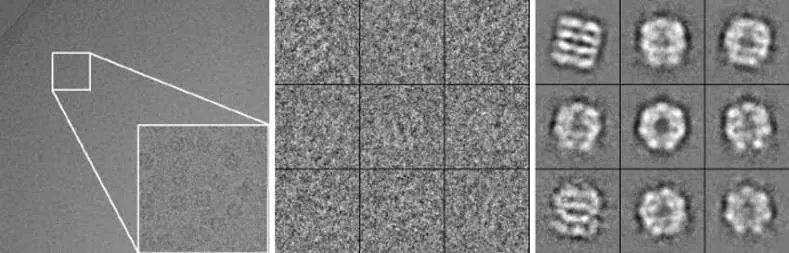
A cryo-EM micrograph showing multiple copies of a macromolecule embedded in vitreous ice — the type of high-signal, low-motion image that UltrAuFoil is engineered to preserve during high-resolution data collection.
Why Gold Support Outperforms Carbon for High-Resolution Work
- Uniform conductivity — Gold’s high electrical conductivity means charge from the electron beam dissipates evenly across the entire grid, rather than accumulating unpredictably as it can on carbon.
- Matched mechanical response — A single-material grid has no interface between dissimilar materials to create stress, warping, or micro-movement under thermal load from the beam.
- Reduced charging artifacts — Carbon films can develop localized charge that distorts the electron beam path and introduces image artifacts. Gold’s conductivity largely eliminates this.
- Better reproducibility across sessions — Because the mechanical behaviour of gold-on-gold is more predictable and uniform than carbon-on-metal, data quality is more consistent from grid to grid and session to session.
- Proven in published high-resolution structures — Many landmark sub-3 Å and sub-2 Å cryo-EM structures published in the last several years have used UltrAuFoil as the specimen support, particularly for smaller, more motion-sensitive targets.
UltrAuFoil and the Thermo Fisher Titan Krios
UltrAuFoil is frequently described as “Krios-optimized” because of how it complements the other high-resolution features of the Titan Krios platform. The Krios is designed to push cryo-EM to its physical limits — a cold field emission gun for high coherence, an energy filter to remove inelastically scattered electrons, and a direct electron detector capable of counting individual electrons at high frame rates. Every one of these features is aimed at maximizing the signal-to-noise and resolution achievable per micrograph.
But all of that instrumentation sophistication is undermined if the specimen itself moves during the exposure. This is precisely the problem UltrAuFoil addresses — by removing one of the last major sources of motion at the specimen level, it allows the rest of the Krios’s advanced imaging chain to deliver its full resolution potential.
Why UltrAuFoil Matters Most on High-End Instruments
The benefit of UltrAuFoil scales with the resolution ambition of your project. On a mid-range instrument targeting 4-5 Å structures, the difference between QUANTIFOIL and UltrAuFoil may be marginal. On a Krios targeting sub-2.5 Å resolution with automated EPU data collection running overnight sessions of thousands of movies, eliminating beam-induced motion at the grid level becomes one of the most cost-effective ways to improve final map quality.
Typical Instrument
Titan Krios / Glacios
Automation Software
EPU / SerialEM
Target Resolution
< 3 Å (often < 2.5 Å)
Recommended Geometry
R 1.2/1.3
UltrAuFoil Hole Geometries Available in India
UltrAuFoil follows the same naming convention as QUANTIFOIL: R [hole diameter]/[hole spacing] in micrometres. The same physical hole size considerations apply — smaller, denser holes for automated high-throughput SPA, larger holes for bigger complexes or tomography.
| Type |
Hole Ø (µm) |
Spacing (µm) |
Best For |
Automation |
| R 1.2/1.3 |
1.2 |
1.3 |
The standard choice for high-resolution SPA on Krios/Glacios. Small–medium particles, EPU automation, sub-3 Å targets. ★ Most requested |
✓ EPU Preferred |
| R 2/1 |
2.0 |
1.0 |
Maximum hole density with larger holes — high data throughput per grid square, good for larger complexes needing more ice area per particle. |
✓ EPU / SerialEM |
| R 2/2 |
2.0 |
2.0 |
Larger holes with more gold support between — useful for bigger macromolecular complexes, thicker ice tolerance, tomography applications. |
✓ SerialEM |
Glow discharge note: UltrAuFoil’s gold film is more delicate under plasma exposure than QUANTIFOIL’s carbon film. Use gentler glow discharge parameters — a typical starting point is 15 mA for 15 seconds (versus 25 mA / 25 seconds commonly used for QUANTIFOIL). Over-discharging can damage the gold film structure. Always optimize for your specific glow discharge unit and sample.
Handling & Storage — Same Care as QUANTIFOIL, With Extra Attention to Gold
UltrAuFoil grids require the same careful handling protocols as any cryo-EM TEM substrate, with one additional consideration: the gold film, while more mechanically stable during imaging, is not necessarily more robust to physical handling than carbon — treat it with equal or greater care.
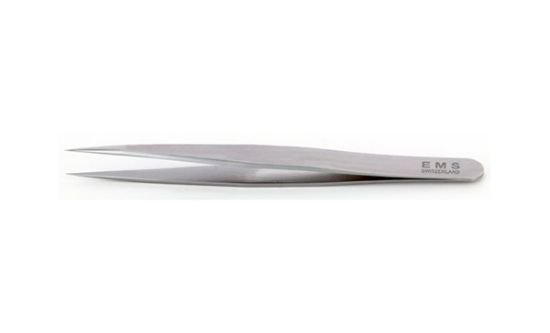
EM-grade tweezers — essential for safe UltrAuFoil grid handling. Available from GBS.
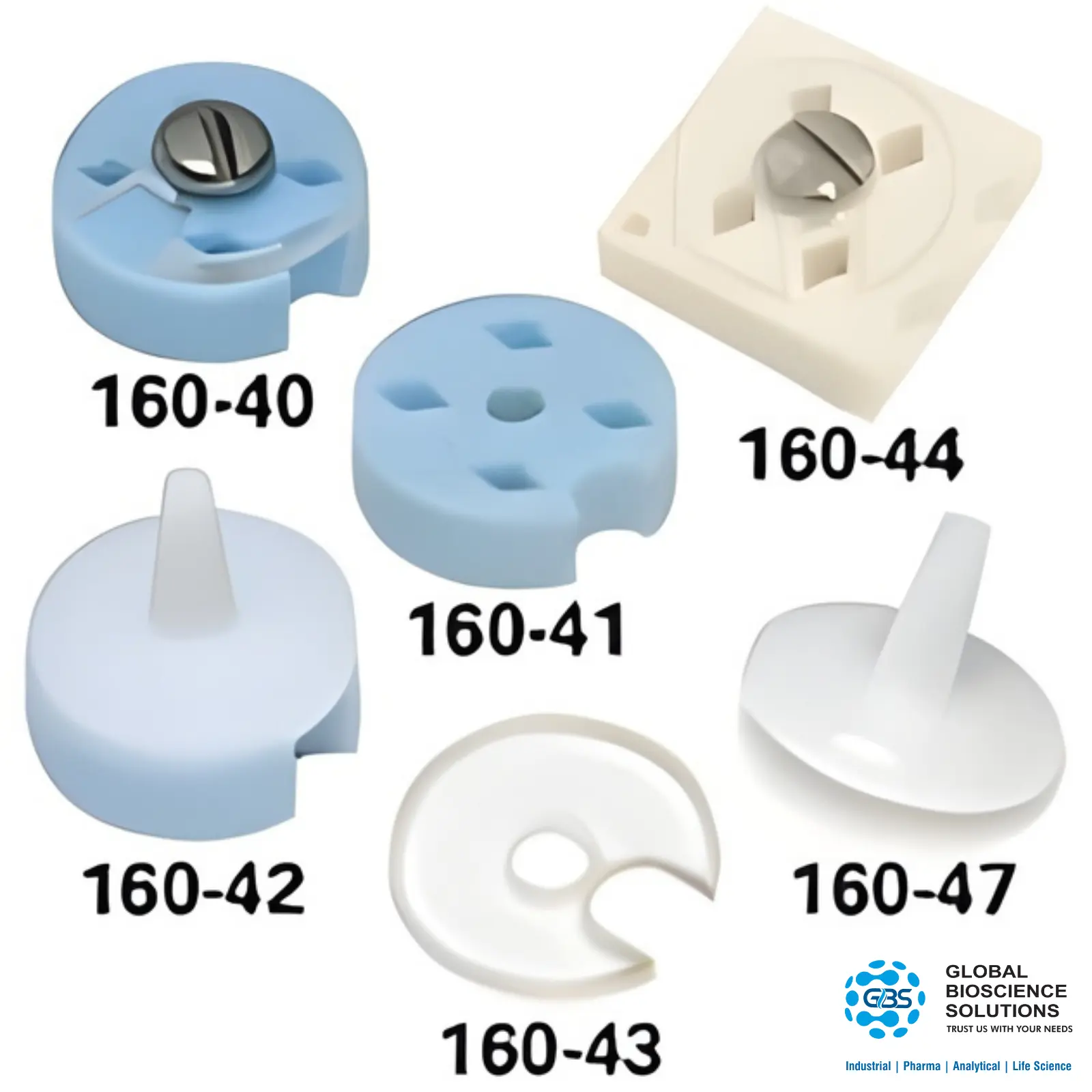
Cryo-EM grid boxes for storing and transporting UltrAuFoil grids after vitrification.
✅ Handling Best Practices
- ✓ Store at -20°C, allow to equilibrate before opening
- ✓ Handle only with clean EM-grade tweezers, grip the rim
- ✓ Use gentler glow discharge (15mA / 15 sec starting point)
- ✓ Vitrify within 30–45 minutes of glow discharge
- ✓ Transfer to cryo boxes under LN₂ immediately after plunging
❌ Avoid
- ✗ Over-discharging with QUANTIFOIL-level plasma parameters
- ✗ Opening cold packaging in humid ambient air
- ✗ Touching the gold film area with tweezers
- ✗ Storing at room temperature for extended periods
- ✗ Delaying vitrification long after glow discharge
UltrAuFoil vs QUANTIFOIL — When to Use Which
QUANTIFOIL (Holey Carbon)
Routine work · Optimization · Economical
- → Best for initial sample optimization and screening
- → Good for 3–4 Å resolution targets
- → Lower cost per grid
- → Most published protocols reference this substrate
- → Available on Cu, Au, Ni mesh
UltrAuFoil (Holey Gold)
Final high-resolution data collection
- ✓ Best for sub-3 Å, especially sub-2.5 Å targets
- ✓ Dramatically reduced beam-induced motion
- ✓ Optimized for Krios/Glacios EPU sessions
- ✓ Reduced charging artifacts vs carbon
- ✓ Higher cost — reserved for final resolution push
Practical workflow recommendation: Use
QUANTIFOIL for initial sample optimization, buffer screening, and preliminary data collection to establish that your sample behaves well. Once you’re ready for the final high-resolution data collection push — particularly on a Krios targeting sub-3 Å — switch to
UltrAuFoil to squeeze out the additional resolution that motion reduction provides. GBS supplies both from Bengaluru, so switching between them requires just one phone call.
Cold-Chain Shipping — In Stock at GBS Bengaluru
UltrAuFoil grids, like QUANTIFOIL, require careful cold-chain handling from manufacturer to your bench. India’s cryo-EM facilities have historically faced 6–12 week wait times when importing directly from Europe — with no visibility into how the grids were handled during that transit and customs process.
GBS stocks UltrAuFoil in Bengaluru and ships with verified cold-chain packaging — insulated containers, ice packs, and temperature monitoring — directly to research institutions across India. Combined with QUANTIFOIL, AutoGrid rings, C-clips, Vitrobot blotting paper, and cryo grid boxes, GBS offers a complete cryo-EM consumables supply chain from a single Indian supplier.
Same-week dispatch: GBS typically dispatches confirmed UltrAuFoil orders within the same week — with delivery across India in 1–3 business days after dispatch. Contact GBS at
+91 97436 20456 to confirm current stock and pricing before ordering.
Frequently Asked Questions
What is UltrAuFoil and how is it different from QUANTIFOIL?
UltrAuFoil is a holey gold film TEM substrate where both the perforated film and the supporting mesh are made entirely of gold. Standard QUANTIFOIL uses a holey carbon film on a copper, gold, or nickel mesh. Because gold conducts heat and charge uniformly across the whole UltrAuFoil grid — with no dissimilar-material interface — beam-induced motion during data collection is dramatically reduced, directly improving achievable resolution, particularly below 3 Å. Both are available from GBS India.
Why does gold reduce beam-induced motion compared to carbon?
Beam-induced motion arises from differential charging and mechanical stress between the specimen support film and the surrounding metal mesh under electron irradiation. In carbon-on-copper QUANTIFOIL grids, the mismatch in thermal expansion and conductivity between the two materials causes the film to flex during dose exposure. UltrAuFoil eliminates this mismatch — film and mesh are both gold, expanding and dissipating charge uniformly, resulting in a much more mechanically stable specimen support during each exposure.
Is UltrAuFoil specifically optimized for Thermo Fisher Titan Krios?
UltrAuFoil works on any cryo-TEM, but it is strongly associated with high-end instruments like the Titan Krios and Glacios used for near-atomic resolution structural biology. On a Krios with cold FEG, energy filter, and direct electron detector, every source of motion matters — UltrAuFoil removes the beam-induced motion contributed by the grid itself, letting the rest of the imaging chain deliver its full resolution potential during automated EPU data collection.
What hole geometries are available for UltrAuFoil in India?
UltrAuFoil is available in the standard geometries: R 1.2/1.3 (most requested — small holes, high density, ideal for EPU automation on Krios), R 2/1 (maximum hole density, larger holes), and R 2/2 (larger holes, more support, good for bigger complexes and tomography). GBS stocks UltrAuFoil in Bengaluru with cold-chain dispatch across India.
How much more does UltrAuFoil cost compared to QUANTIFOIL?
UltrAuFoil carries a price premium over standard QUANTIFOIL due to the higher material cost of an all-gold structure and more complex manufacturing. The exact premium depends on hole geometry and order quantity. Contact GBS at +91 97436 20456 or sales@globalbiosciencesolution.com for current pricing. Many labs use QUANTIFOIL for routine screening, reserving UltrAuFoil for final high-resolution sessions.
Does UltrAuFoil require different glow discharge parameters than QUANTIFOIL?
Yes. UltrAuFoil’s gold film is more sensitive to plasma damage than carbon. Use gentler parameters — a typical starting point is 15 mA for 15 seconds (versus 25 mA / 25 seconds commonly used for QUANTIFOIL). Over-discharging can damage the delicate gold film. Always optimize time and current for your specific glow discharge unit (e.g. PELCO easiGlow) and sample requirements.
Where can I buy UltrAuFoil grids in India?
UltrAuFoil holey gold film grids are available in India from Global Bioscience Solutions (GBS), Bengaluru. GBS stocks UltrAuFoil with cold-chain dispatch across India — typically dispatching within the same week of confirmed order, avoiding 6–12 week Europe lead times. Contact GBS at +91 97436 20456 or sales@globalbiosciencesolution.com, or visit the UltrAuFoil product page.
References & External Sources
Order UltrAuFoil Grids from GBS India
In stock in Bengaluru. Cold-chain dispatch. Same-week delivery. All geometries: R 1.2/1.3, R 2/1, R 2/2 — all-gold film and mesh.