Written by GBS Technical Team · Cryo-EM Consumables Specialists Since 2021 · Last updated: 2026
What Is QUANTIFOIL? — The Complete Explanation
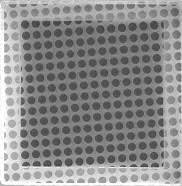
QUANTIFOIL is a brand of holey carbon film TEM substrates manufactured by Quantifoil Instruments GmbH, headquartered in Jena, Germany. The name refers to a thin amorphous carbon film — supported on a metal mesh grid (copper, gold, or nickel) — that contains a regular, precisely defined array of circular or square holes.
In cryo-EM, the sample (protein solution, virus suspension, cell extract) is applied to the QUANTIFOIL grid, excess liquid is blotted away, and the grid is rapidly plunge-frozen in liquid ethane (vitrified). What remains is a thin film of vitreous (glassy, non-crystalline) ice suspended across the holes in the carbon film — the sample molecules are embedded in this ice, and the holes provide a window through which the electron beam can image them without any underlying support material adding background signal or noise.
This is fundamentally different from standard continuous carbon support films used in negative stain TEM — QUANTIFOIL’s holey structure is specifically designed for cryo-EM, where background signal from a continuous carbon support would significantly degrade image quality and prevent high-resolution structure determination.
Why the holes matter: In cryo-EM single particle analysis (SPA), you are averaging thousands of individual particle images to reconstruct a 3D structure at near-atomic resolution. Any background signal — including signal from an underlying carbon support film — reduces the signal-to-noise ratio of individual particle images and degrades the final reconstruction. Imaging particles suspended in ice across the holes of a QUANTIFOIL grid eliminates this background entirely.
QUANTIFOIL Grid Types — Copper, Gold & Nickel
🟤
Copper Mesh (Standard)
- Most widely used — 95%+ of cryo-EM labs
- Available in 200, 300, and 400 mesh
- Compatible with standard Vitrobot and manual plunge-freezing
- AutoGrid and C-clip compatible (300 mesh)
- Most cost-effective option for routine cryo-EM
- Slight beam-induced motion compared to gold
- Recommended for: screening, optimisation, routine data collection
🟡
Gold Mesh (Premium)
- Reduces beam-induced motion during data collection
- More chemically inert — no copper ion release
- Better hydrophilicity retention after glow discharge
- Preferred for high-resolution structure determination
- Also available as UltrAuFoil (gold film, not just gold mesh)
- Higher cost than copper — used for final high-res datasets
- Recommended for: high-resolution SPA, sensitive samples
⬜
Nickel Mesh (Specialist)
- Used when copper interference must be eliminated
- Compatible with energy-filtered TEM (EFTEM)
- Non-magnetic — important for specific experiment types
- Less commonly used than copper or gold
- Available for specialist applications on request from GBS
- Recommended for: EFTEM, copper-sensitive workflows
QUANTIFOIL Hole Geometries — Complete Reference Table
QUANTIFOIL uses a notation system where R = round holes, S = square holes, and the two numbers represent hole diameter / hole spacing in micrometres. The most important geometry choice depends on your particle size and vitrification behaviour.
| Geometry |
Hole Shape |
Hole Diameter (µm) |
Hole Spacing (µm) |
Best For |
Notes |
| R 1.2/1.3 Most Popular |
Round |
1.2 |
1.3 |
Standard SPA — proteins, complexes, viruses |
Default choice for most cryo-EM projects. Compatible with EPU and SerialEM hole-targeting. AutoGrid compatible (300 mesh). |
| R 2/1 |
Round |
2.0 |
1.0 |
Larger particles; more sample per hole needed |
Larger holes — useful for particles >15 nm, or when vitreous ice thickness needs to be thicker. Dense hole packing. |
| R 2/2 |
Round |
2.0 |
2.0 |
Large particles; more carbon between holes needed |
More carbon support between holes — better mechanical stability. Useful for heavy samples or when grid integrity is a concern. |
| R 0.6/1 |
Round |
0.6 |
1.0 |
Small particles; thin ice preferred |
Small holes enforce thin ice — reduces background. Useful for small proteins (<100 kDa) where thin ice is critical. Less usable area per hole. |
| R 1/4 |
Round |
1.0 |
4.0 |
Isolated holes for manual picking |
Wide spacing between holes — useful for cryo-ET and manual acquisition workflows where widely spaced holes are preferred. |
| R 3.5/1 |
Round |
3.5 |
1.0 |
Cryo-ET; very large particles or cells |
Very large holes — for cryo-electron tomography of cellular specimens, organelles, or very large complexes. Low particle density per hole. |
| S 7/2 |
Square |
7 × 7 |
2.0 |
Cryo-ET; FIB-milled lamellae |
Square 7 µm holes — used in cryo-ET workflows, particularly for FIB-SEM milled lamellae where large flat areas are needed. |
If in doubt, start with R 1.2/1.3 on 300 mesh copper. This is the standard first-choice geometry used by the vast majority of cryo-EM facilities worldwide for SPA projects. It is the geometry most thoroughly optimised for EPU and SerialEM automated workflows, the most widely stocked, and the most thoroughly documented in published protocols. Switch to other geometries only after initial screening shows a specific need.
Mesh Count — 200, 300, 400: Which to Choose?
The mesh count refers to the number of grid squares per inch of the metal mesh that supports the carbon film. Higher mesh count = smaller grid squares = more squares per grid = more sample area, but smaller individual squares.
| Mesh Count | Square Size | Use Case | AutoGrid Compatible? |
|---|
| 200 mesh |
Larger squares — fewer per grid |
Manual workflows; cryo-ET where large tilt series areas needed |
No |
| 300 mesh Standard |
Medium squares — balanced coverage |
Standard for all SPA workflows. AutoGrid and C-clip compatible — required for Krios/Glacios autoloaders. Most commonly ordered. |
✓ Yes — Krios/Glacios autoloader |
| 400 mesh |
Smaller squares — more squares per grid |
Higher mechanical stability; more sample positions per grid. Used when 300 mesh carbon film is fragile or for specialist workflows. |
No |
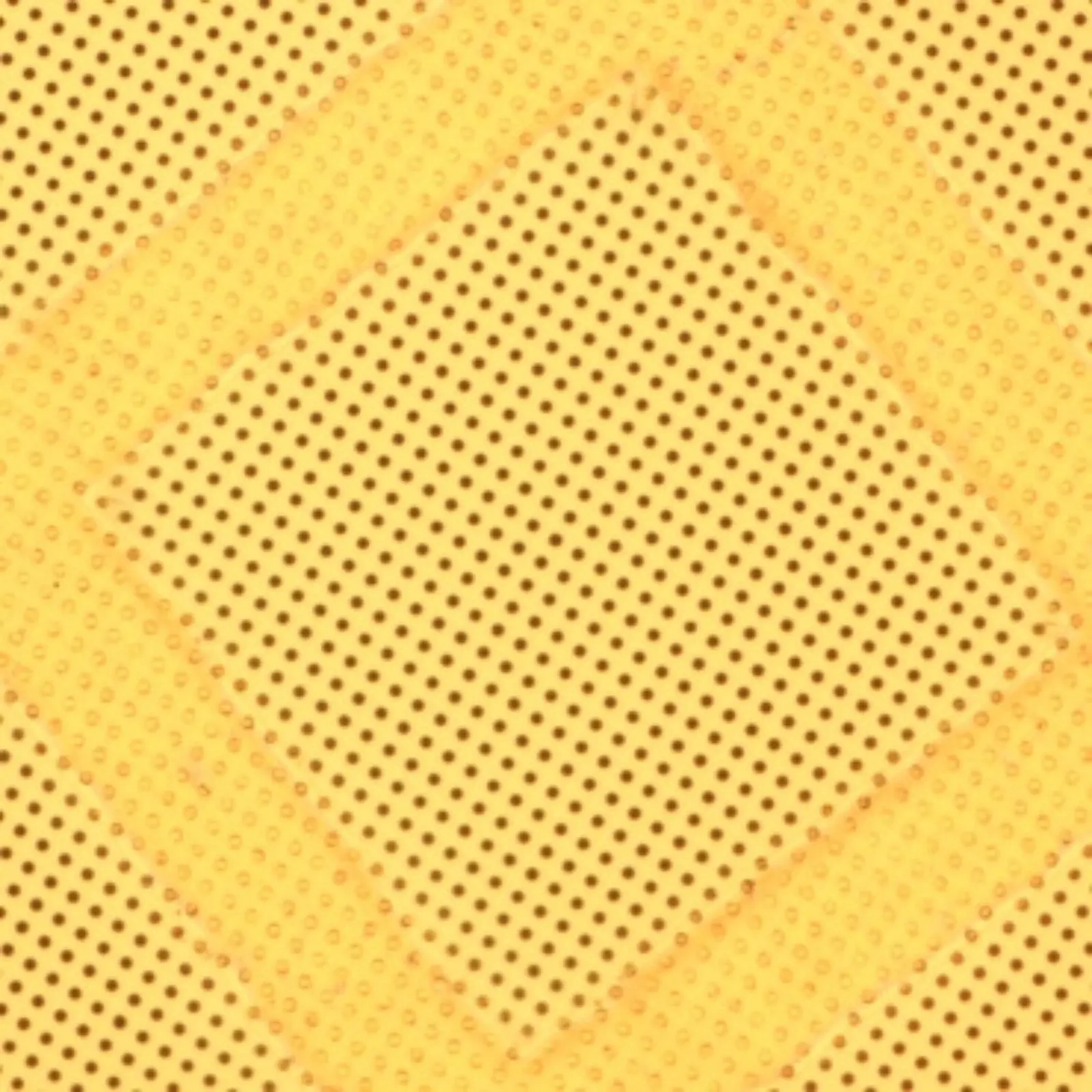
UltrAuFoil holey gold film — gold foil variant from Quantifoil Instruments, available from GBS India
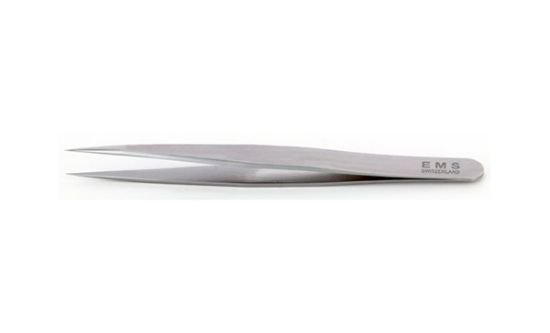
Self-closing anti-capillary tweezers for cryo-EM grid handling — available from GBS India
How to Handle & Store QUANTIFOIL Grids
QUANTIFOIL holey carbon films are mechanically delicate. A single mishandled grid is wasted — and at the cost of imported consumables, that matters. Following the correct handling procedure prevents the most common causes of grid damage.
1
Always use self-closing anti-capillary tweezers
Standard forceps damage grids. Use self-closing tweezers (Dumont No. 5 style, anti-capillary — available from GBS) that grip the outer rim of the grid only. Never grip the centre of the grid where the carbon film is. Hold grids carbon-side up when viewing — the shiny side is the carbon film.
Critical — wrong tweezers destroy grids
2
Glow discharge immediately before use
QUANTIFOIL carbon films are hydrophobic as supplied. Apply glow discharge (25 mA, 25 seconds, 0.39 mbar on PELCO easiGlow for standard copper grids) to render the surface hydrophilic immediately before use. Use glow-discharged grids within 30–45 minutes — hydrophilicity decays rapidly in air. Do not glow discharge in advance and store.
Non-negotiable — skip this and ice will not form correctly
3
Apply sample immediately after glow discharge
Transfer the glow-discharged grid to the Vitrobot (or manual plunger) sample application area within 30–45 minutes. Apply 3–4 µL of sample to the carbon film side. Blot and plunge-freeze immediately using pre-set blotting parameters. Do not let the grid surface dry before blotting — flash evaporation concentrates sample and creates artefacts.
Vitrobot: set humidity 100%, temperature 4°C for most proteins
4
Store unused grids at −20°C in sealed container
Unused QUANTIFOIL grids should be stored at −20°C in the original sealed packaging. Do not open packaging until ready to use — exposure to air introduces hydrocarbon contamination onto the carbon film surface that degrades glow discharge response. Never store at room temperature for more than a few weeks.
−20°C storage · Sealed · Dry · Away from organic solvents
5
Handle vitrified grids only in liquid nitrogen
Once vitrified, grids must never be allowed to warm above −135°C (the devitrification temperature). Transfer vitrified grids between cryo storage equipment using cryo-transfer tweezers in liquid nitrogen. Load into the AutoGrid press and AutoGrid rings under liquid nitrogen. Store vitrified grids in liquid nitrogen Dewars or cryo storage pucks at −196°C until data collection.
Vitrification is irreversible — warming destroys ice quality
Cold-Chain Shipping from GBS India — Why It Matters
❄️ Verified Cold-Chain · Bengaluru → India
QUANTIFOIL Shipped Cold-Chain from GBS
QUANTIFOIL grids are temperature-sensitive. Exposure to elevated temperatures and humidity during transit degrades the carbon film’s surface properties and reduces glow discharge response. GBS ships all QUANTIFOIL grids with verified cold-chain packaging from Bengaluru — ensuring grids arrive in the same condition as they left the warehouse.
- Grids stored at −20°C at GBS Bengaluru warehouse until dispatch
- Cold-chain verified packaging: insulated box + phase-change coolant packs
- Temperature-monitored transit — no ambient-temperature exposure
- Same-week dispatch for in-stock geometries
- Ships to all Indian cryo-EM facilities: IISc · NCBS · TIFR · IIT cryo-EM centres
- No customs delays — domestic supply from Bengaluru vs 8–12 weeks from Europe
Order QUANTIFOIL from GBS →
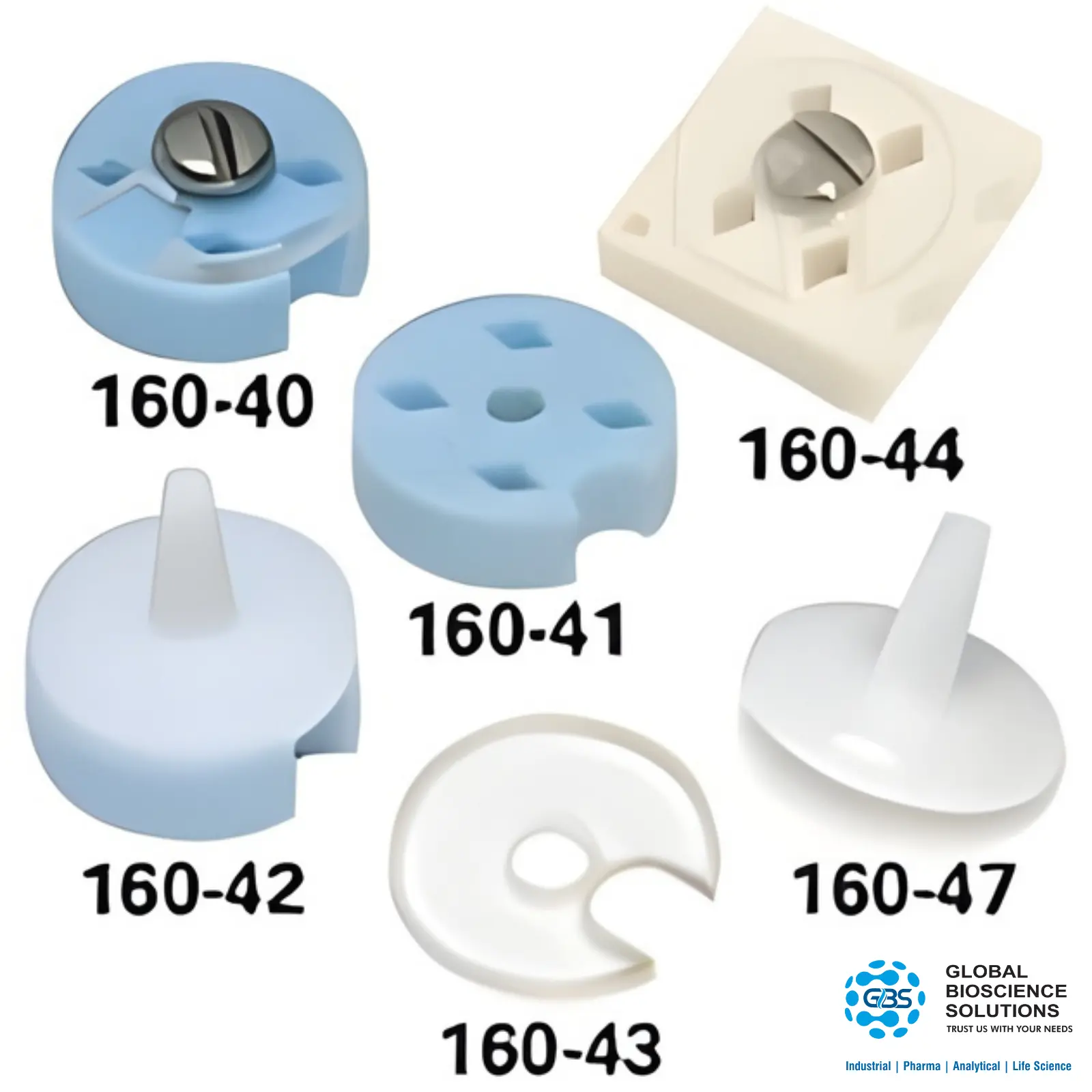
Cryo-EM grid boxes ready for cold-chain dispatch · GBS Bengaluru
QUANTIFOIL Applications — Cryo-EM & Automated Data Collection
Single Particle Analysis (SPA)
QUANTIFOIL R 1.2/1.3 on 300 mesh copper is the de facto standard grid for cryo-EM single particle analysis. The 1.2 µm holes are large enough to contain multiple particles per hole while the 1.3 µm carbon spacing provides mechanical stability. For automated SPA workflows, EPU (Thermo Fisher) and SerialEM use the regular hole array to predict grid positions from a low-magnification atlas, enabling unattended overnight data collection sessions collecting tens of thousands of micrographs automatically.
EPU (Thermo Fisher Scientific) Automated Data Collection
EPU is the automated data collection software for Thermo Fisher cryo-EM systems (Krios G4, Glacios, Talos Arctica). EPU targets holes in QUANTIFOIL grids using a hole-targeting algorithm that identifies the regular array from a low-magnification map. For EPU, grids must be loaded in AutoGrid rings (available from GBS) and mounted in C-clips before loading into the Krios/Glacios autoloader. QUANTIFOIL 300 mesh is required for AutoGrid compatibility.
SerialEM Automated Data Collection
SerialEM (developed at HHMI Janelia and University of Colorado) is the open-source automated cryo-EM acquisition software used at most academic cryo-EM facilities in India. SerialEM’s hole-targeting acquisition mode (Low Dose with autocontouring) supports QUANTIFOIL holey carbon grids — mapping hole positions and centering on individual holes for particle image acquisition. SerialEM is used at IISc Bengaluru, NCBS, and TIFR Cryo-EM facilities.
Cryo-Electron Tomography (Cryo-ET)
For cryo-ET of purified complexes and thick specimens, larger hole geometries are preferred: R 2/1, R 3.5/1, and S 7/2 on copper or gold mesh. The larger holes accommodate the tilted beam path at high tilt angles (±60°) used in tilt series acquisition without the grid bars shadowing the beam. For in-situ cryo-ET of FIB-milled lamellae, S 7/2 square-hole grids are widely used.
Stocking recommendation for Indian cryo-EM facilities: Maintain a minimum of 3 boxes (150 grids) of R 1.2/1.3 Cu 300 mesh as working stock. Order before you run out — even with GBS’s fast India dispatch, running out of grids during an active project causes costly delays. GBS can set up a regular supply schedule for high-volume facilities.
Complete cryo-EM consumables from GBS: QUANTIFOIL grids ·
UltrAuFoil gold film grids · AutoGrid rings & C-clips · Vitrobot blotting paper (medical grade) · PELCO easiGlow glow discharge unit · Cryo grid boxes · Cryo-EM Dewars & shippers — all in-stock at GBS Bengaluru with cold-chain dispatch.
Frequently Asked Questions
What is QUANTIFOIL and what is it used for?
QUANTIFOIL is a brand of holey amorphous carbon film TEM substrates from Quantifoil Instruments GmbH (Germany). The grid consists of a regular array of precisely defined holes in a carbon film on a metal mesh. In cryo-EM, the sample is vitrified in a thin ice film suspended across these holes — providing a background-free window for electron imaging. QUANTIFOIL is the industry standard for cryo-EM single particle analysis (SPA) and cryo-ET, used at every major cryo-EM facility in India including IISc Bangalore, NCBS, and TIFR.
What is the difference between QUANTIFOIL R 1.2/1.3 and R 2/1?
The notation gives hole diameter / hole spacing in micrometres. R 1.2/1.3: 1.2 µm round holes, 1.3 µm spacing — the standard for most SPA projects, EPU and SerialEM compatible. R 2/1: 2.0 µm holes, 1.0 µm spacing — larger holes for bigger particles or when more sample per hole is needed, with dense hole packing. R 2/2: 2.0 µm holes, 2.0 µm spacing — same hole size with more carbon between holes for better mechanical stability. Start with R 1.2/1.3 and only switch when you have a specific reason from your screening results.
Do QUANTIFOIL grids need glow discharge before use?
Yes — glow discharge is essential. QUANTIFOIL carbon films are hydrophobic as supplied. Without glow discharge, aqueous sample beads up rather than spreading, and vitreous ice does not form across the holes. Recommended parameters: 25 mA, 25 seconds, 0.39 mbar (PELCO easiGlow) for standard copper grids. Use within 30–45 minutes of glow discharge — do not glow discharge in advance. GBS supplies PELCO easiGlow units and Quorum glow discharge systems in India.
What is the difference between QUANTIFOIL copper and gold grids?
Copper grids are the standard choice — widely used, cost-effective, and compatible with all cryo-EM workflows. Gold mesh grids reduce beam-induced motion (which blurs high-resolution images), are more chemically inert, and maintain better hydrophilicity after glow discharge. Gold is preferred for high-resolution SPA data collection where beam-induced motion is limiting your resolution. Also available: UltrAuFoil — gold mesh AND gold film (instead of carbon) — the highest-performance option for demanding high-resolution projects. GBS supplies all three types.
How should QUANTIFOIL grids be stored?
Store at −20°C in the original sealed packaging in a dry environment. Do not open until ready to use — air exposure introduces hydrocarbon contamination that degrades glow discharge response. Do not store at room temperature for extended periods. GBS ships QUANTIFOIL with cold-chain packaging to ensure grids arrive at −20°C regardless of transit temperatures across India.
What is the lead time for QUANTIFOIL grids from GBS India?
For in-stock geometries (R 1.2/1.3 Cu 300 mesh and other common types), GBS ships same-week from Bengaluru with cold-chain packaging. For less common geometries or special orders, lead time is 3–5 weeks from Quantifoil Instruments Germany — compared to 8–12 weeks for direct import from Europe with customs delays. Contact sales@globalbiosciencesolution.com to confirm current stock of your required geometry.
Are QUANTIFOIL grids compatible with EPU and SerialEM automated data collection?
Yes — QUANTIFOIL is the industry standard for automated cryo-EM data collection. EPU (Thermo Fisher, for Krios/Glacios/Talos) and SerialEM (open-source, widely used in India) both support hole-targeting acquisition on QUANTIFOIL grids. EPU requires grids loaded in AutoGrid rings and C-clips (also available from GBS) for the Krios/Glacios autoloader — QUANTIFOIL 300 mesh is the required grid type for AutoGrid compatibility.
References & External Sources
Order QUANTIFOIL Grids from GBS India
In-stock. Cold-chain verified. Same-week dispatch from Bengaluru. No 8-week Europe wait. All geometries and mesh types available — contact GBS for current pricing and stock.