Written by GBS Technical Team, Cryo-EM Consumables Specialists · Last updated: 2026
What Is an AutoGrid Assembly?
Modern high-throughput cryo-EM data collection depends on automation. Instruments like the Thermo Fisher Titan Krios can run overnight, unattended, collecting thousands of high-resolution micrographs across dozens of grids, but only if those grids can be loaded, tracked, and transferred by a robotic autoloader without human intervention at every step. This is the exact problem the AutoGrid assembly solves.
An AutoGrid assembly consists of two components working together: an AutoGrid ring, a small, precisely machined metal ring that a standard 3.05mm TEM grid sits inside, and a C-clip, a tiny spring clip that locks the grid firmly in place inside the ring. Once assembled, the whole unit becomes a self-contained, robot-handleable package that can be stored in an autoloader cassette, transferred into the microscope’s vacuum system by a robotic arm, and returned to storage, all without a human ever touching the grid directly after the initial clipping step.
This is what makes fully automated, high-throughput single particle analysis (SPA) practical. Without the AutoGrid system, every grid exchange during a data collection session would require manual intervention, breaking vacuum and interrupting the automated workflow that software like EPU depends on.
Why this matters for Indian cryo-EM facilities: As more Indian institutions (NCBS, TIFR, IISc, and others) bring Krios and Glacios systems online, correctly sourced AutoGrid rings and C-clips become a critical, recurring consumable. A poorly manufactured or incompatible ring can jam an autoloader mechanism, in the worst case requiring a service engineer visit to clear. Sourcing genuine, correctly toleranced components matters as much as sourcing the grids themselves.
The Two Components: Ring & C-Clip
⭕
AutoGrid Ring
The Holder
A precisely machined metal ring, typically gold-plated copper or titanium, sized to fit a standard 3.05mm TEM grid. The ring has a groove around its circumference into which the C-clip seats. The ring’s outer geometry is manufactured to exact tolerances matching the robotic gripper fingers and cassette slots of the Krios/Glacios autoloader system.
🔗
C-Clip
The Retainer
A small, C-shaped spring component made from shape-memory alloy. It compresses open for insertion, then closes back to its pre-set shape once released, applying gentle and consistent spring pressure to hold the grid securely against the ring, without crushing or damaging the delicate holey film.
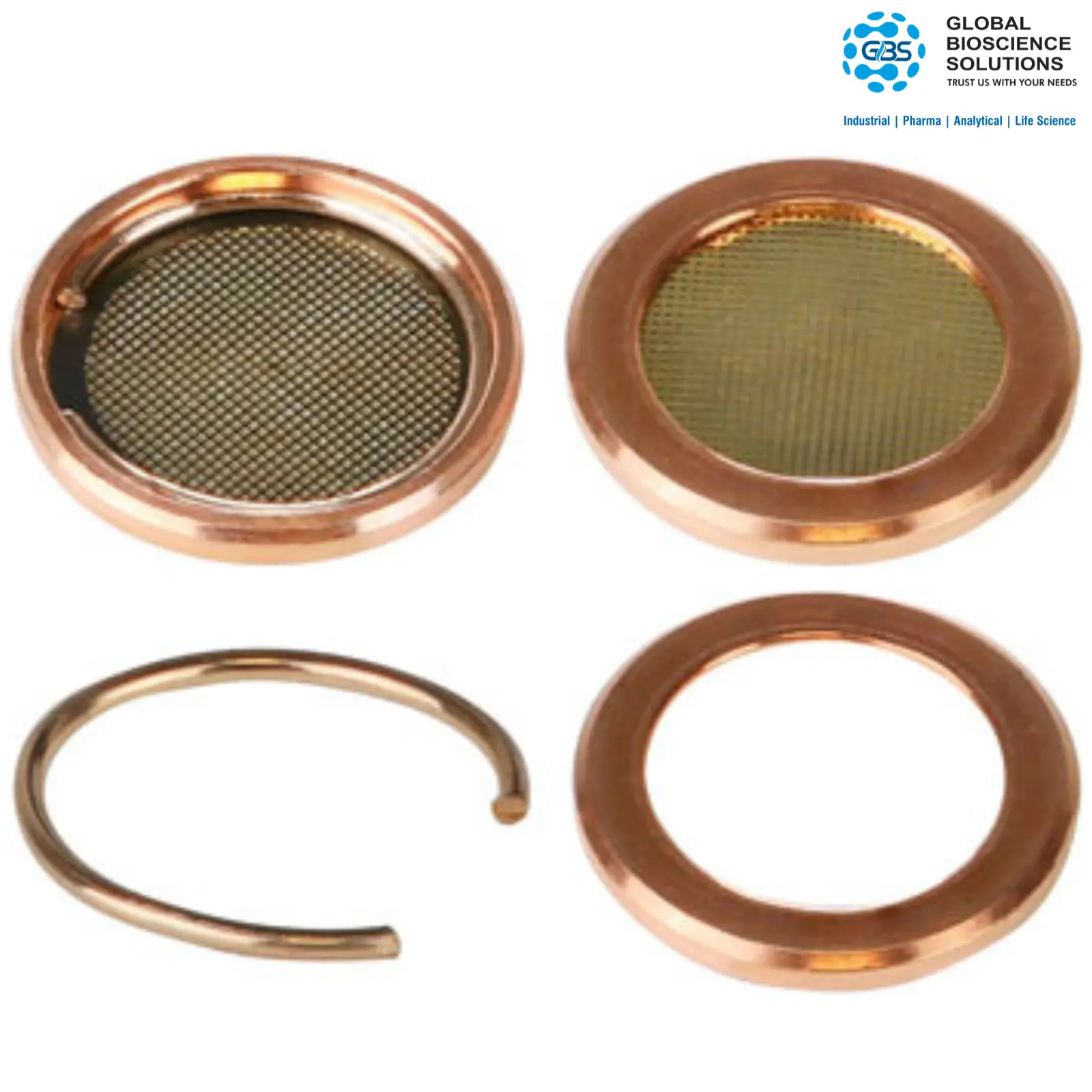
AutoGrid ring, holds standard 3.05mm TEM grid for autoloader cassette compatibility
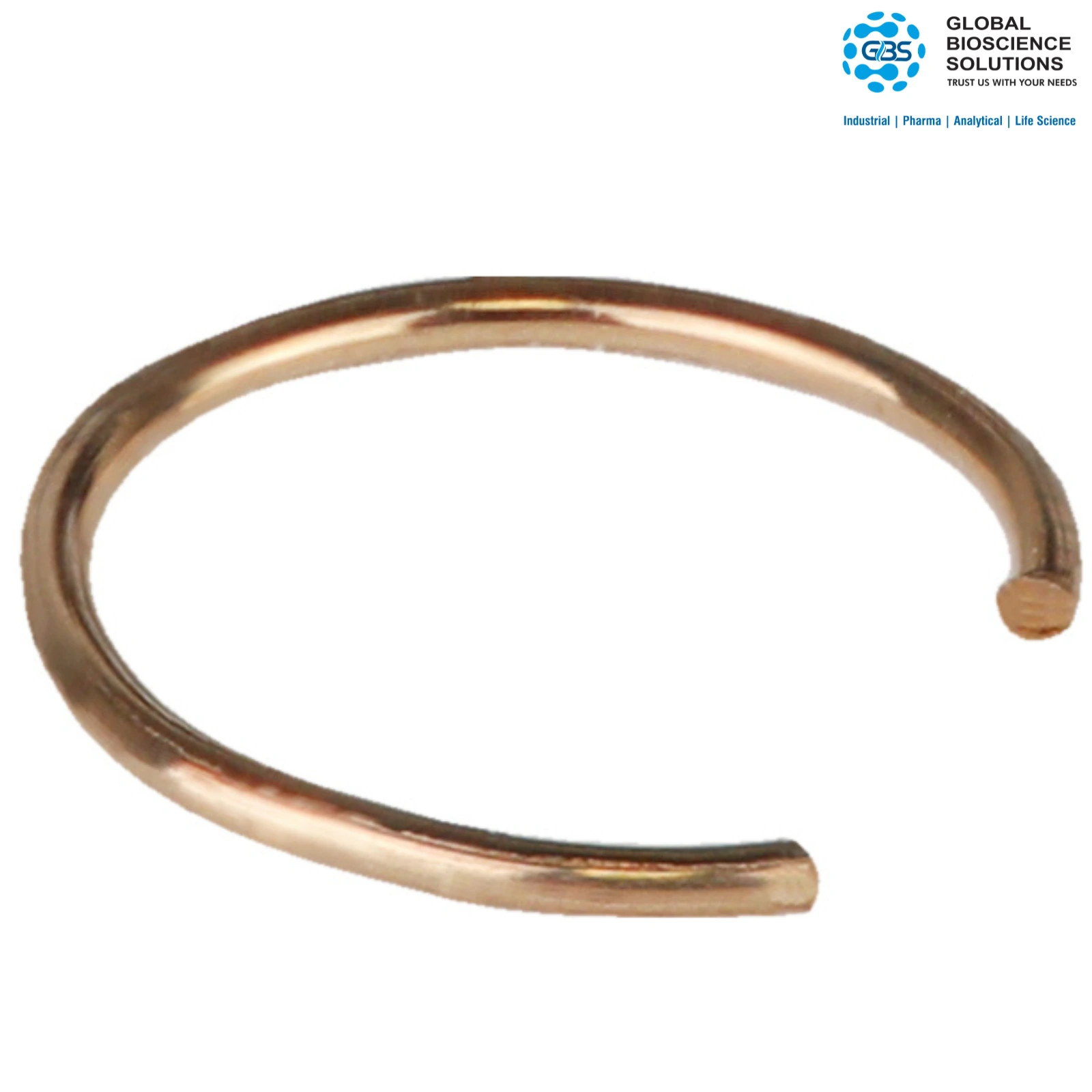
C-clip insertion tool, used to compress and seat the C-clip into the AutoGrid ring groove
Why Shape-Memory Alloy? The Engineering Behind the C-Clip
The C-clip’s material choice is not incidental. It is central to why the AutoGrid system works reliably at cryogenic temperatures over thousands of load/unload cycles across a facility’s lifetime. C-clips are manufactured from shape-memory alloy, typically a nitinol-based nickel-titanium alloy.
Shape-memory alloys have a defined “trained” shape that they reliably return to after being mechanically deformed, provided the deformation stays within their elastic range. When a C-clip is compressed open using the insertion tool, it is being temporarily deformed away from its trained closed shape. On release, it springs back to that exact pre-set geometry, applying a known, repeatable, and gentle clamping force against the grid every single time.
This matters enormously for cryo-EM specifically because:
- The clip must function reliably at -196°C in liquid nitrogen, where many standard spring materials become brittle or lose tension characteristics
- Grip force must be consistent enough to prevent the grid shifting during robotic handling and vacuum transfer, without being so strong that it cracks or deforms the grid
- Facilities load and unload thousands of grids per year, and material fatigue in a standard spring steel clip would introduce inconsistency over time, exactly what shape-memory alloy is engineered to resist
Ordinary spring steel, by contrast, is prone to fatigue and stress relaxation. Repeated compression cycles can gradually reduce its spring tension, leading to looser, less reliable grip over time. This is precisely the failure mode shape-memory alloy is designed to avoid.
How to Assemble an AutoGrid: Step by Step
Correct assembly technique is essential. A poorly clipped grid can shift during robotic handling, jam the autoloader, or simply fail to load properly into the microscope column. The following is the standard clipping workflow used in cryo-EM facilities.
1
Prepare the workspace under cryogenic conditions
Clipping is performed with the grid, ring, and C-clip all submerged or resting in liquid nitrogen to keep the vitrified sample frozen throughout. Use a dedicated clipping station with good visibility and stable footing for tools.
Work under LN₂ at all times
2
Place the vitrified grid into the AutoGrid ring
Using fine EM-grade tweezers, carefully lower the vitrified grid into the AutoGrid ring, ensuring correct orientation (film-side as required by your protocol) and that the grid sits flat and centred within the ring, not tilted or caught on the ring’s edge.
Tools: EM tweezers from GBS
3
Load the C-clip into the insertion tool
Place a C-clip into the jaws of the dedicated C-clip insertion tool. The tool is specifically designed to compress the shape-memory alloy clip open to the correct diameter for insertion without over-stressing the material beyond its elastic limit.
Tool: C-clip insertion tool from GBS
4
Position and seat the C-clip into the ring groove
With the grid correctly positioned in the ring, use the insertion tool to lower the opened C-clip over the assembly and align it precisely with the groove around the ring’s circumference. Confirm alignment visually before releasing.
Check alignment before release
5
Release the tool and confirm full seating
Release the insertion tool’s jaws smoothly, not abruptly, allowing the shape-memory alloy to close back to its trained shape and seat fully into the groove. Inspect the assembly under magnification to confirm the clip is fully and evenly seated with no gaps, and that the grid has not shifted.
Inspect before proceeding
6
Transfer to autoloader cassette or storage
Once confirmed, transfer the completed AutoGrid assembly directly into the autoloader cassette (if loading for immediate data collection) or into a cryo storage box for later use, always keeping the assembly submerged in liquid nitrogen or in vapour-phase LN₂ storage.
Cryo grid boxes available from GBS
Common Mistakes in Clipping and How to Avoid Them
⚠️ Misaligned or upside-down grid
Easy to do with cold, bulky gloves and limited visibility under LN₂. Always verify grid orientation and centring before proceeding to clip. Practice on spare grids first.
⚠️ Over-compressing the C-clip
Forcing the insertion tool beyond the clip’s designed elastic range can permanently deform the shape-memory alloy or cause it to fracture. Use smooth, controlled tool operation. Never force it.
⚠️ Incomplete clip seating
A C-clip that isn’t fully seated in the groove leaves a loose assembly that can eject the grid during robotic handling or transfer. Always visually confirm full, even seating before storage.
⚠️ Clipping a compromised sample
Clipping a grid that already shows visible ice contamination, film tears, or crystallised ice wastes a good AutoGrid assembly on a sample that won’t yield usable data. Screen grids before final clipping where practical.
Practice before precious samples: The clipping technique has a real learning curve. New cryo-EM facility staff should practice on spare, non-critical grids until the motion feels reliable and consistent before clipping irreplaceable or expensive samples.
Thermo Fisher Krios Autoloader Compatibility
AutoGrid rings and C-clips are engineered specifically to match the mechanical specifications of Thermo Fisher’s autoloader cassette and robotic gripper system, used across their high-end cryo-EM platforms.
Compatible Instruments
The AutoGrid system is used with any Thermo Fisher instrument fitted with the autoloader cassette mechanism, enabling automated, unattended grid exchange during long EPU data collection sessions without breaking vacuum for manual intervention.
Primary Instrument
Titan Krios
Also Compatible
Glacios, Talos Arctica
Automation Software
EPU (Thermo Fisher)
Cassette Capacity
Typically 12 AutoGrids per cassette
Using non-genuine or poorly manufactured rings introduces real operational risk. Dimensional inconsistency can cause the robotic gripper to fail to pick up the assembly correctly, or in worse cases, cause a jam requiring a Thermo Fisher service engineer to clear. For facilities running expensive Krios beamtime, sourcing correctly toleranced AutoGrid components is not an area to economise carelessly.
Storage & Handling
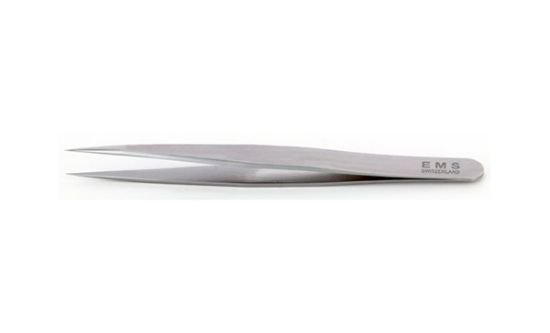
EM-grade tweezers, for handling grids before clipping into AutoGrid assemblies
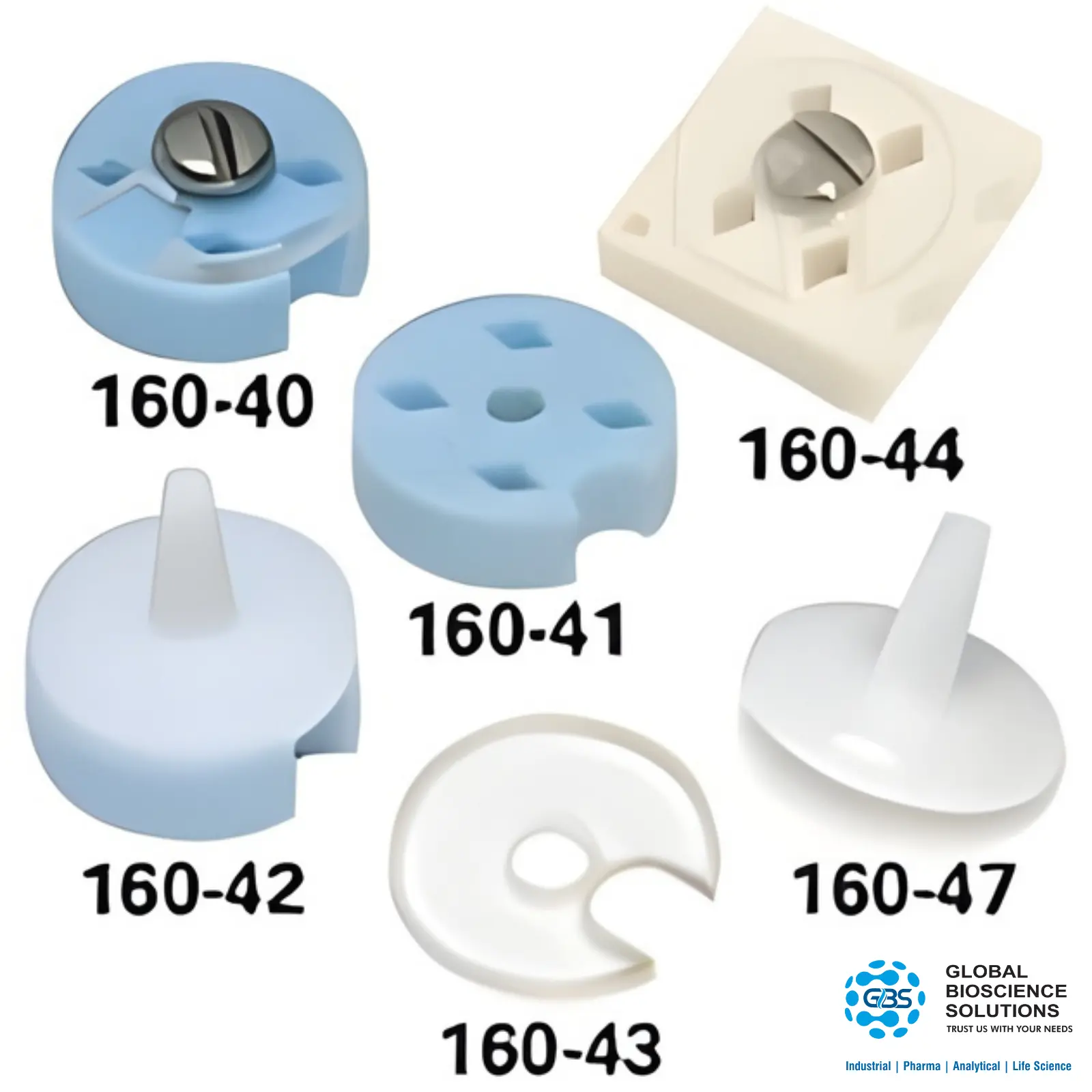
Cryo grid boxes, for storing completed AutoGrid assemblies under liquid nitrogen
Completed AutoGrid assemblies must be stored under liquid nitrogen or in vapour-phase LN₂ storage at all times, never allowed to warm above approximately -150°C, as this risks devitrification (ice crystallisation) that destroys the sample. Unassembled rings (not yet clipped) can be stored at room temperature in a clean, dust-free container, since they carry no sample. C-clips should be stored in their original packaging until use, kept clean and free from contamination that could interfere with the shape-memory mechanism.
Ring reuse policy: AutoGrid rings can generally be reused across many cycles provided they show no visible damage to the C-clip groove and pass a basic dimensional/visual inspection. C-clips are typically treated as single-use per grid in most facility protocols, inexpensive relative to the cost of a failed transfer, and repeated compression can gradually affect spring precision over time.
Frequently Asked Questions
What is an AutoGrid assembly in cryo-EM?
An AutoGrid assembly is a cassette-compatible holder combining an AutoGrid ring (which holds a standard TEM grid) and a C-clip (a spring clip that secures the grid in place). This assembly allows autoloader-equipped microscopes like the Thermo Fisher Titan Krios and Glacios to robotically pick up, transfer, and load grids without manual intervention, enabling unattended, automated overnight data collection with EPU.
How does a C-clip secure a grid inside an AutoGrid ring?
The C-clip is compressed open using a dedicated C-clip insertion tool, positioned into the groove of the AutoGrid ring over the grid, then released. As shape-memory alloy, it springs back to its exact pre-set closed shape, applying gentle, consistent pressure that holds the grid firmly without damaging the holey film, ensuring stable positioning throughout robotic handling and vacuum transfer.
Why is shape-memory alloy used for C-clips instead of standard spring metal?
Shape-memory alloy (nitinol-based) reliably returns to an exact pre-set shape after deformation, regardless of cycle count within its rated life, unlike standard spring steel, which fatigues and loses tension with repeated use. This consistency is critical because the clip must function reliably at -196°C in liquid nitrogen and provide repeatable grip force across thousands of load cycles at a busy cryo-EM facility.
Are AutoGrid rings and C-clips compatible with the Thermo Fisher Titan Krios?
Yes. AutoGrid rings and C-clips are engineered specifically for compatibility with Thermo Fisher’s autoloader cassette system, used on the Titan Krios, Glacios, and Talos Arctica. Ring dimensions and the C-clip groove match the robotic gripper and cassette slots precisely. Using non-compatible components can cause autoloader jams or transfer failures.
What is the most common mistake when clipping a grid into an AutoGrid ring?
The most common mistake is a misaligned or upside-down grid. Easy to do under cryogenic conditions with cold gloves and limited visibility. Other frequent errors include over-compressing the C-clip, incomplete clip seating in the groove, and clipping already-compromised samples. Practicing on spare grids before working with precious samples significantly reduces these errors.
Can AutoGrid rings be reused after removing a grid?
Yes, AutoGrid rings can typically be reused across many cycles if they show no damage to the C-clip groove and pass visual inspection. C-clips are generally single-use per grid in most facility protocols, since repeated compression can gradually affect spring precision and clips are inexpensive relative to the cost of a failed grid transfer.
Where can I buy AutoGrid rings, C-clips, and the insertion tool in India?
AutoGrid rings, C-clips, and the C-clip insertion tool are available in India from Global Bioscience Solutions (GBS), Bengaluru. GBS stocks these alongside QUANTIFOIL and UltrAuFoil grids, cryo grid boxes, and EM tweezers, with cold-chain dispatch across India. Contact GBS at +91 97436 20456 or sales@globalbiosciencesolution.com.
References & External Sources
Order AutoGrid Rings & C-Clips from GBS India
In stock in Bengaluru, rings, C-clips, and the dedicated insertion tool. Cold-chain dispatch, same-week delivery across India, fully Krios/Glacios compatible.